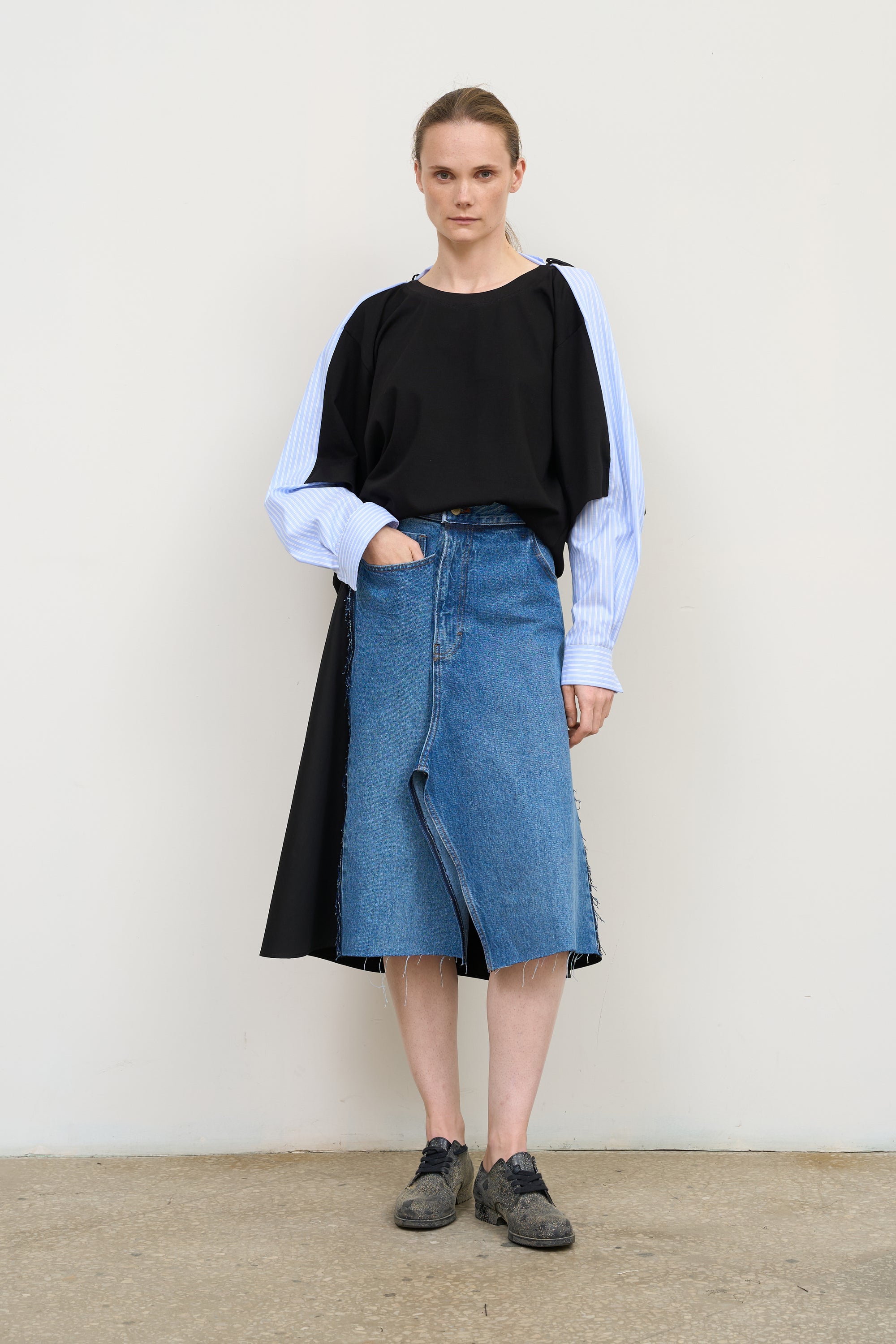
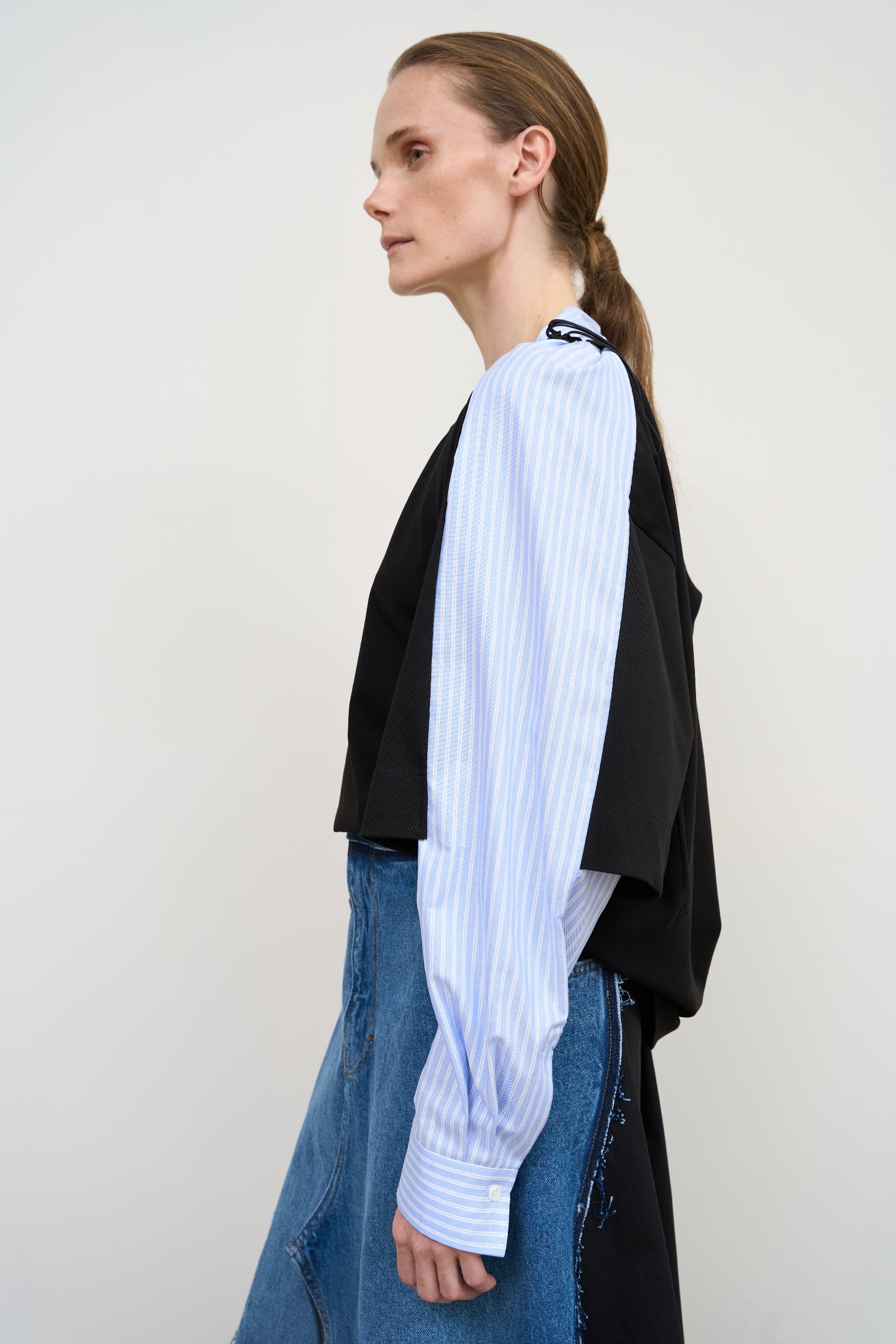
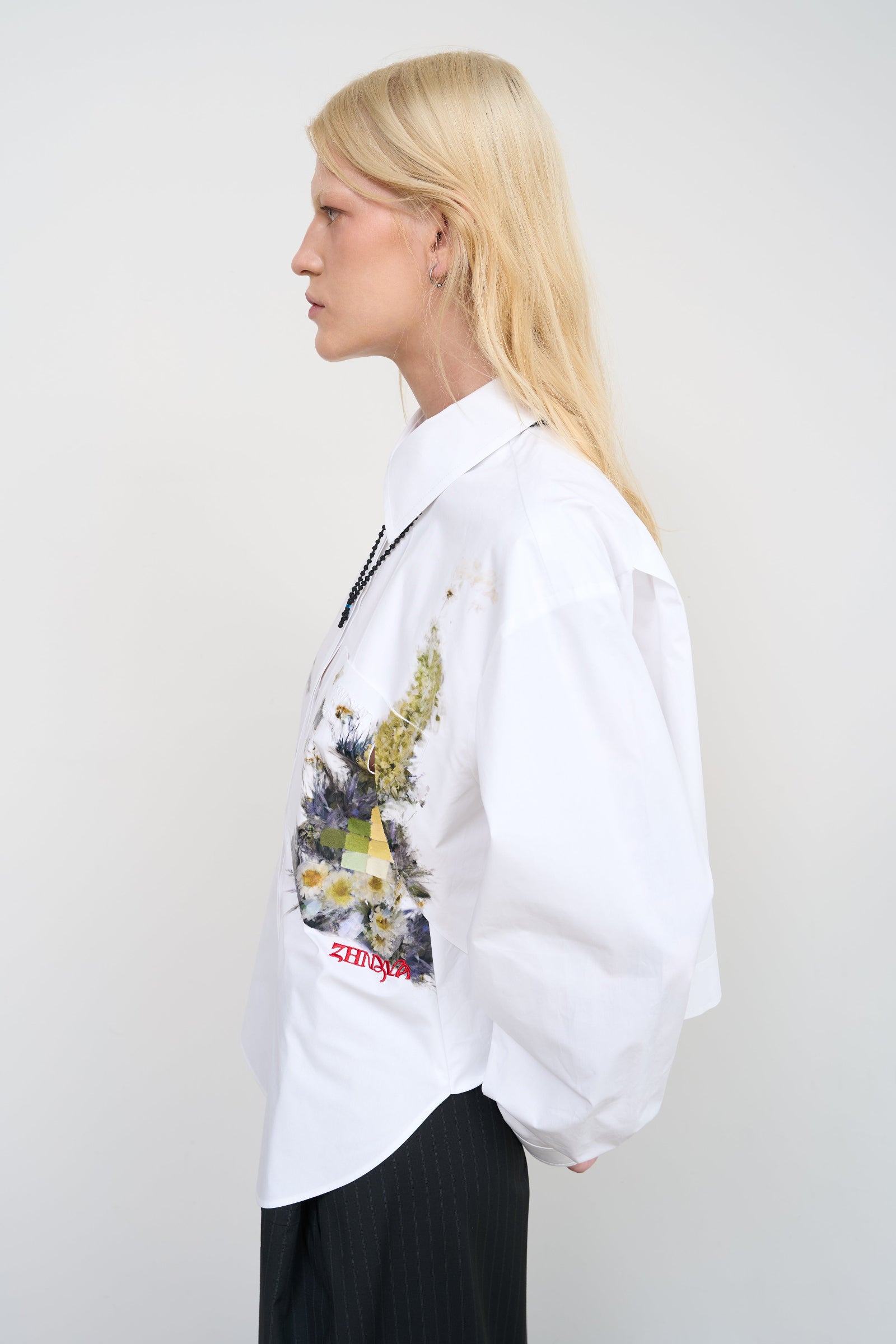
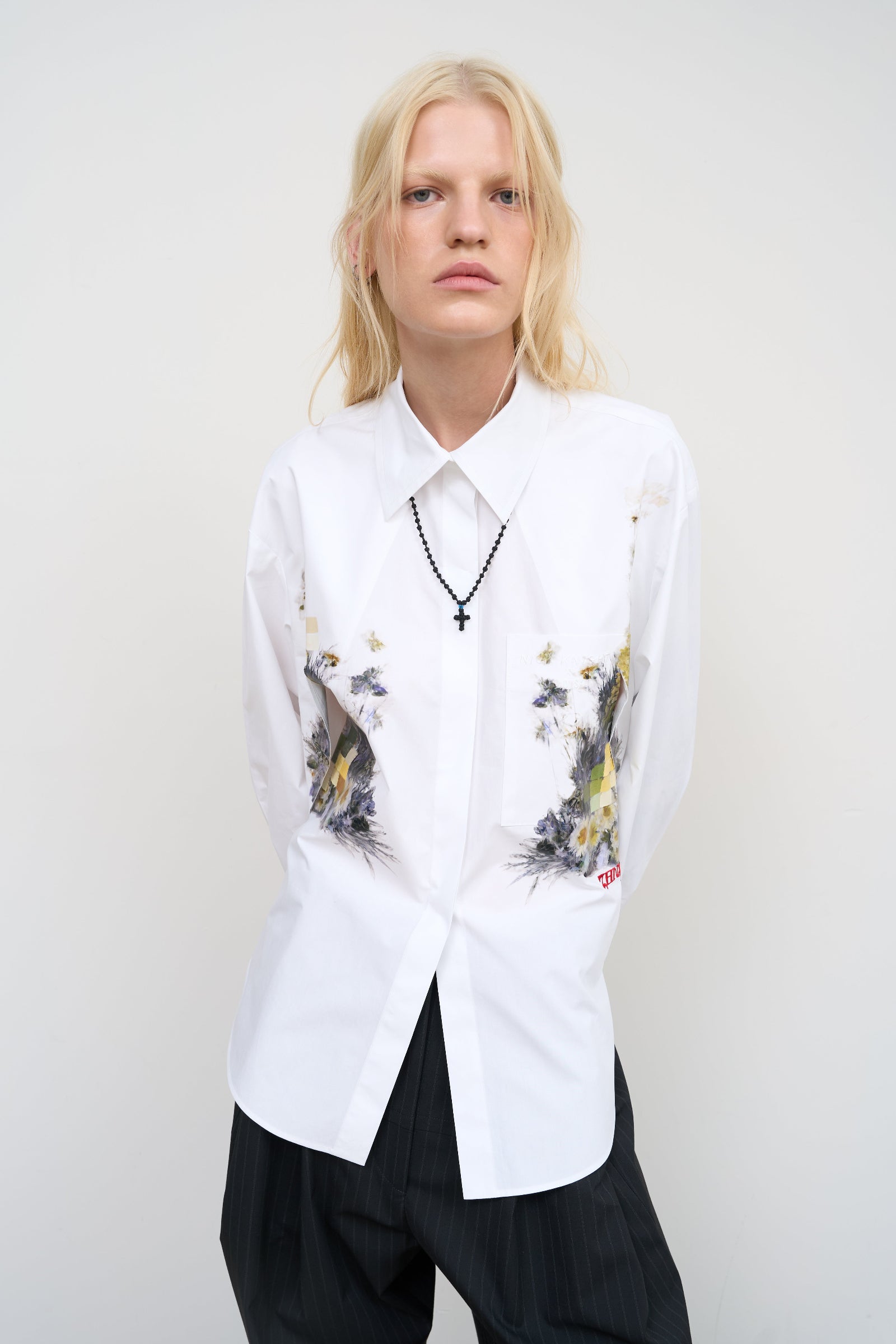
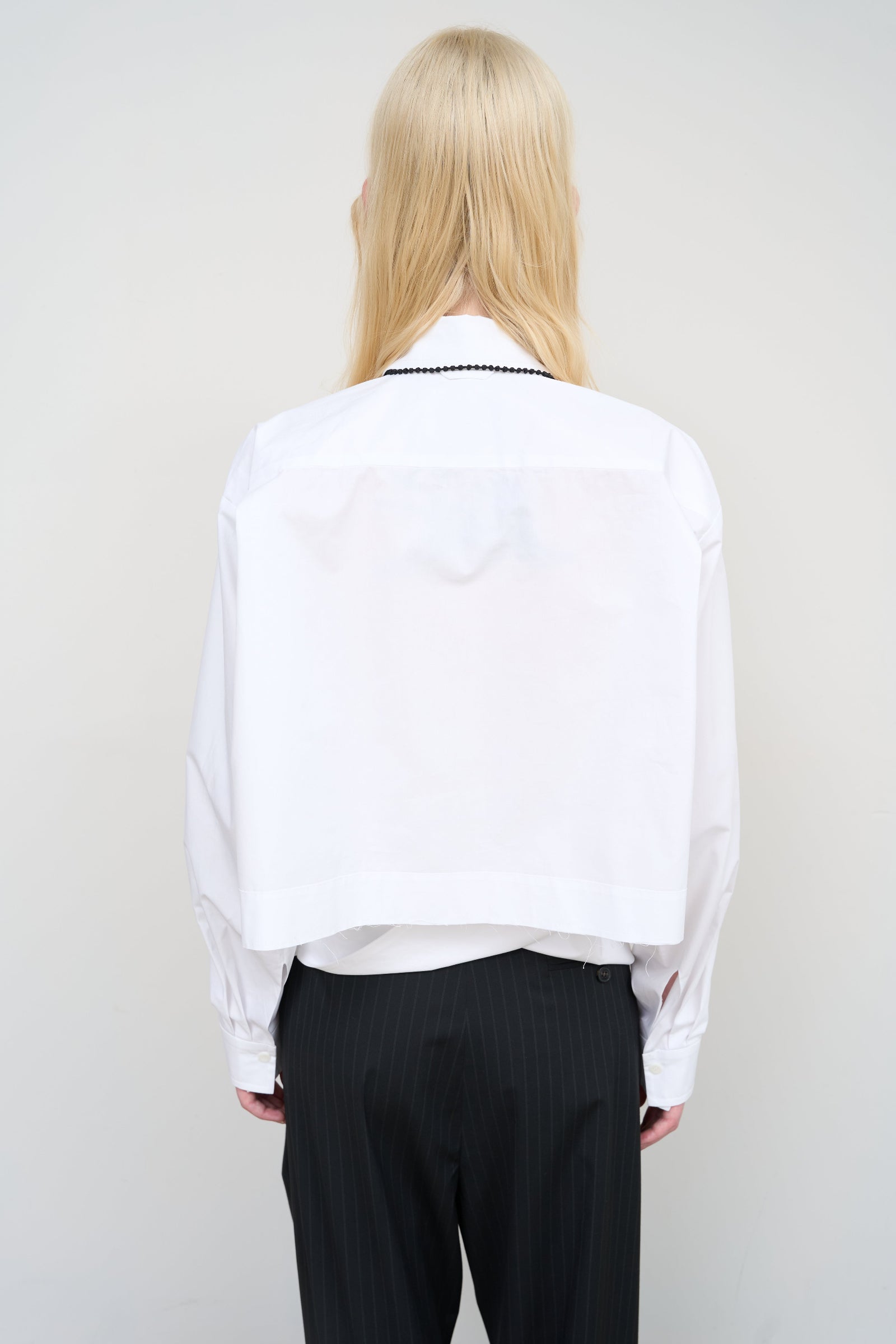
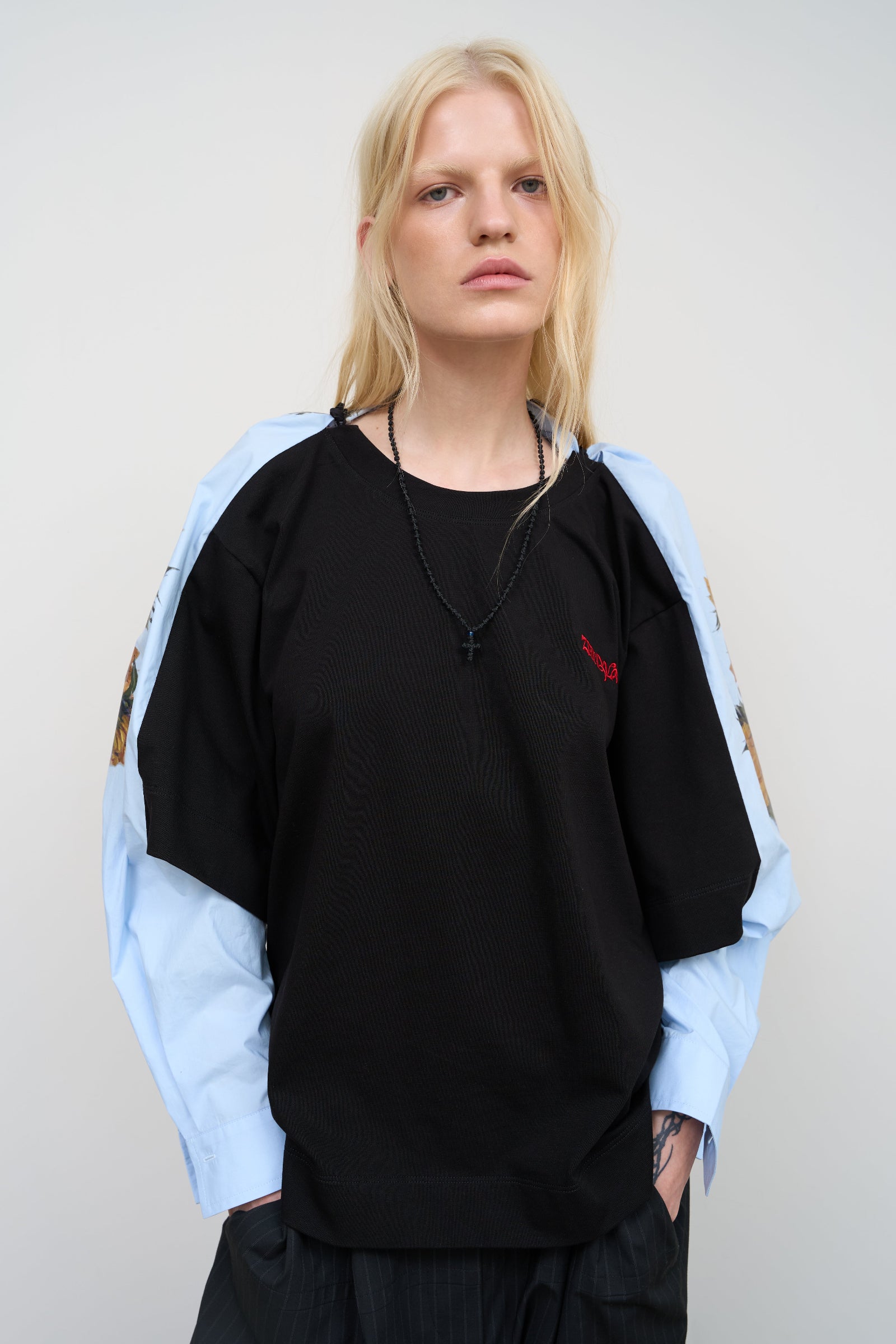
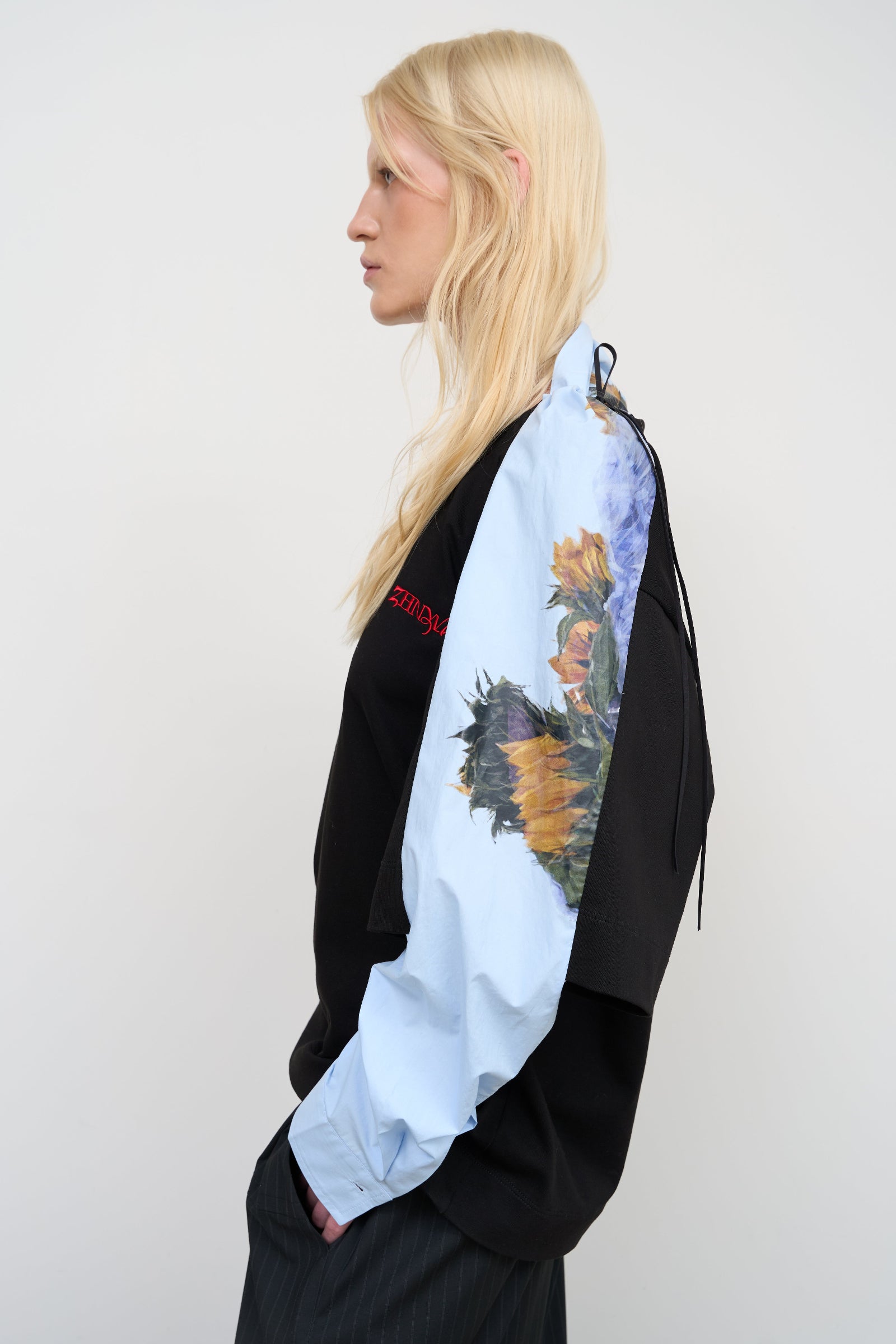
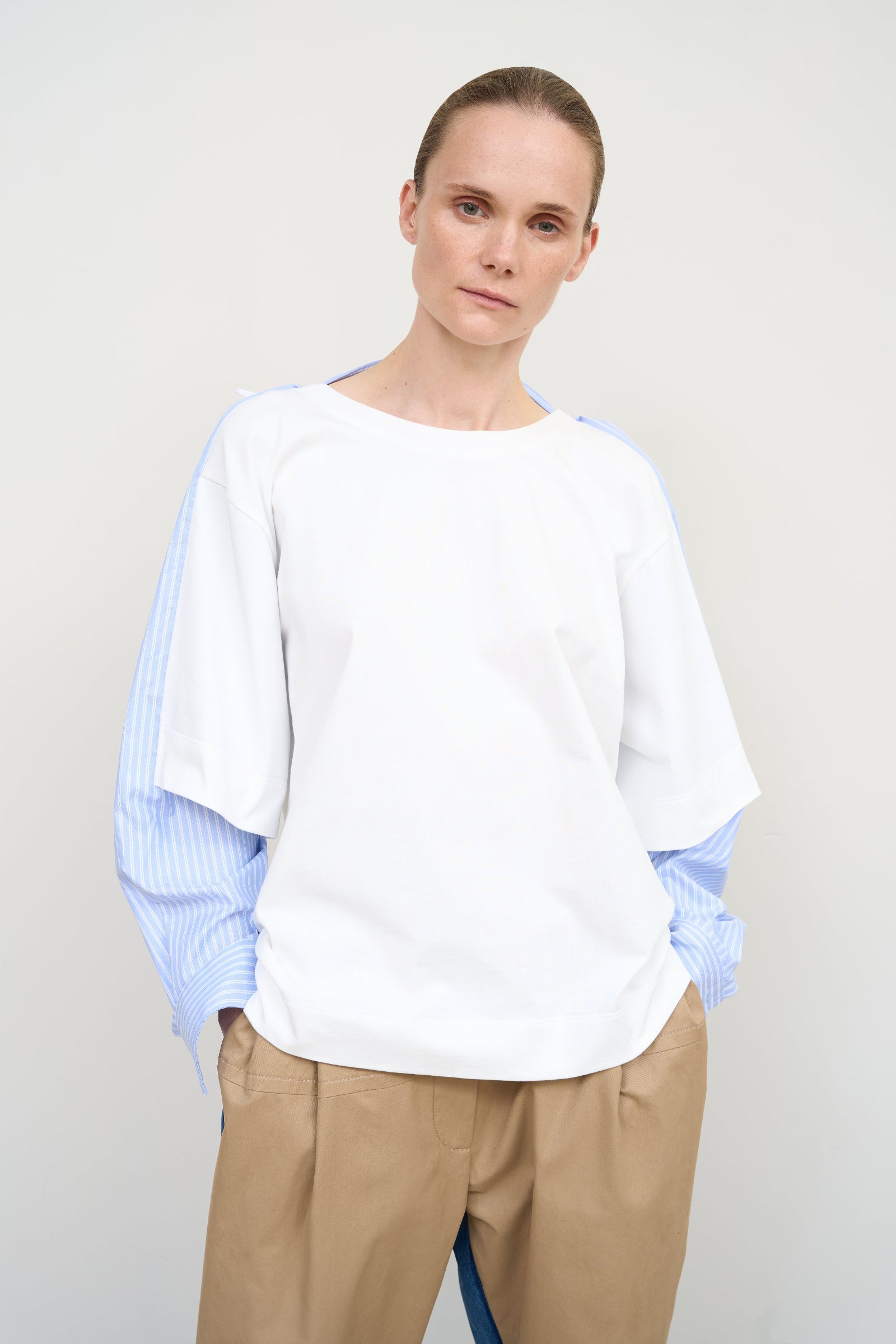
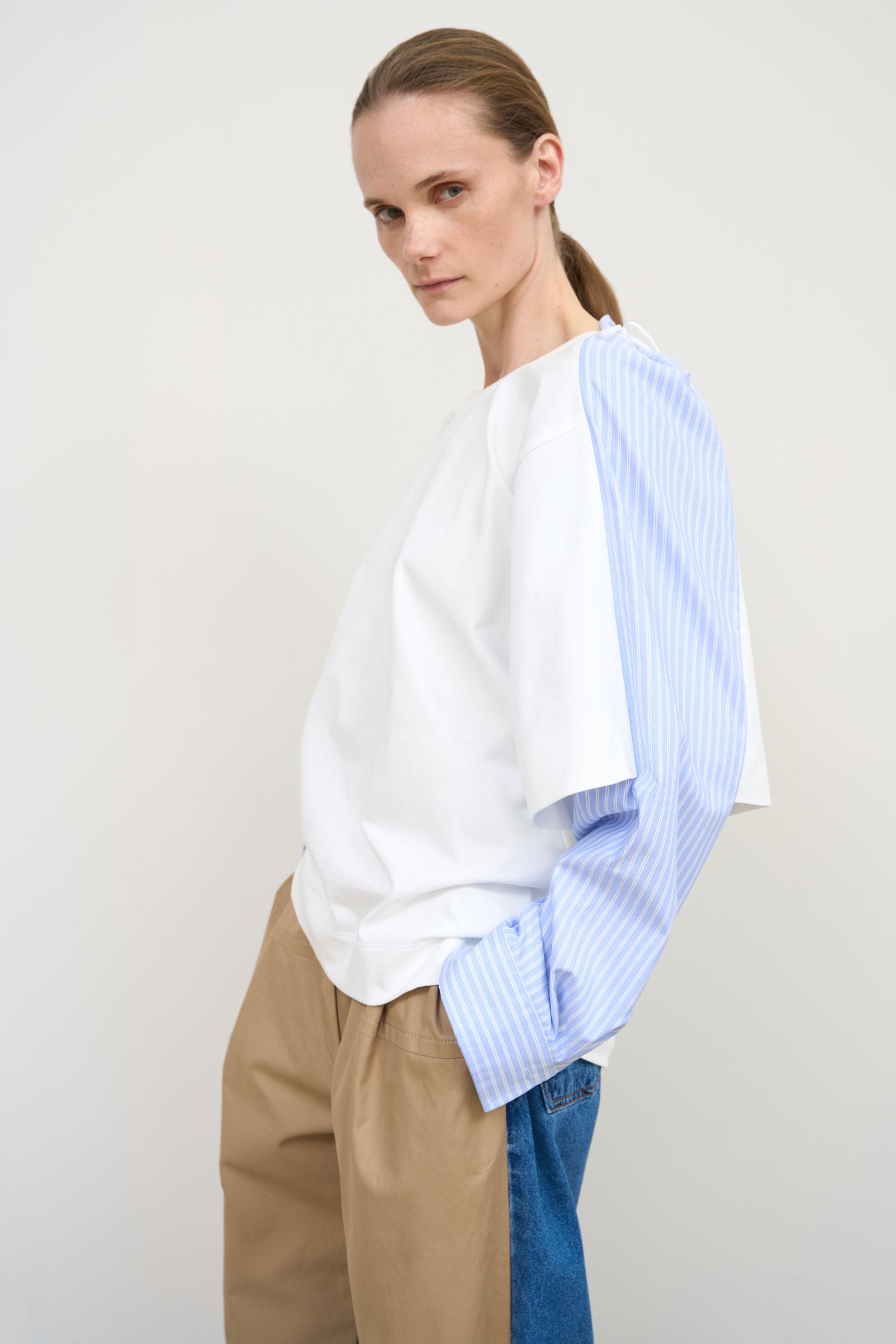
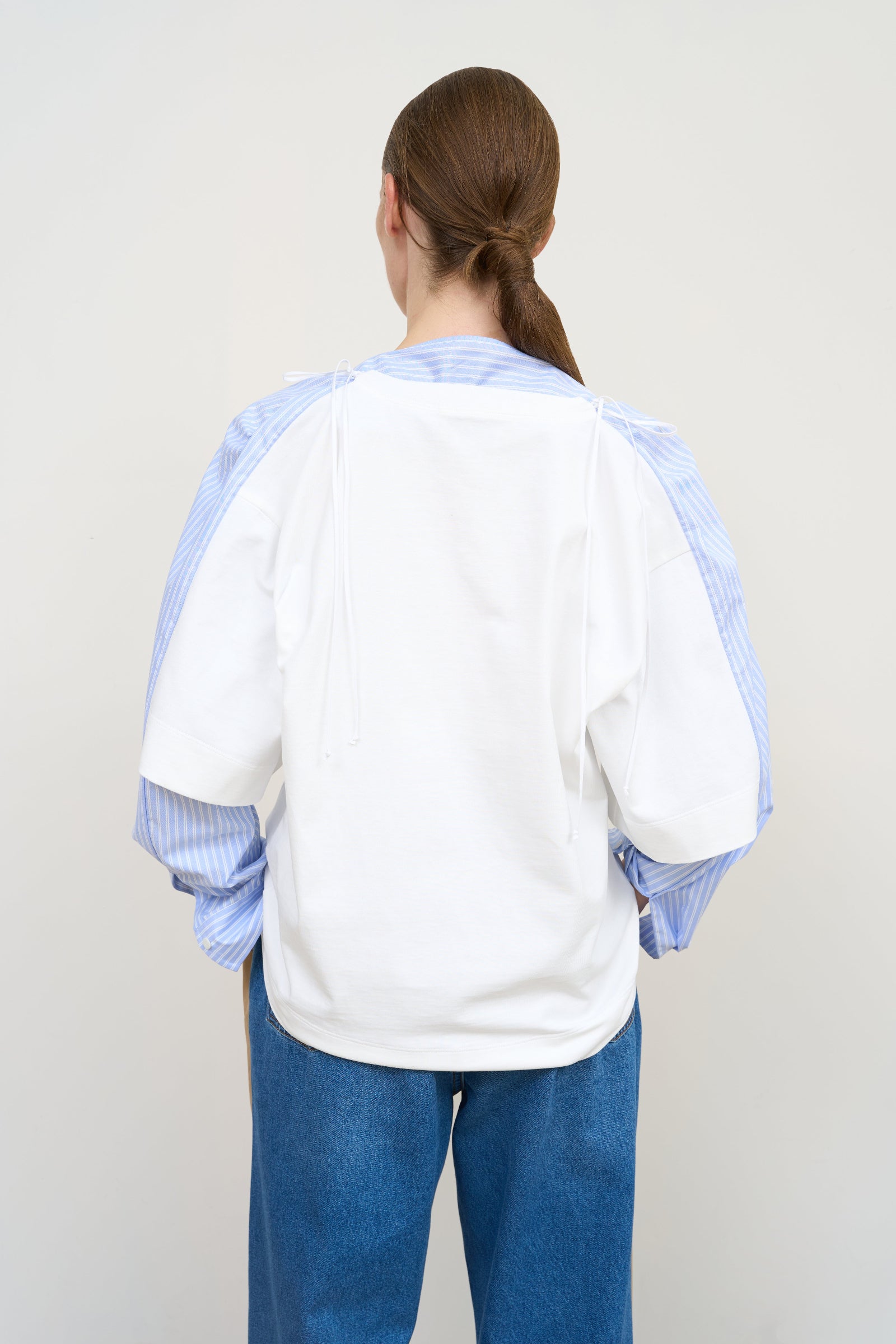
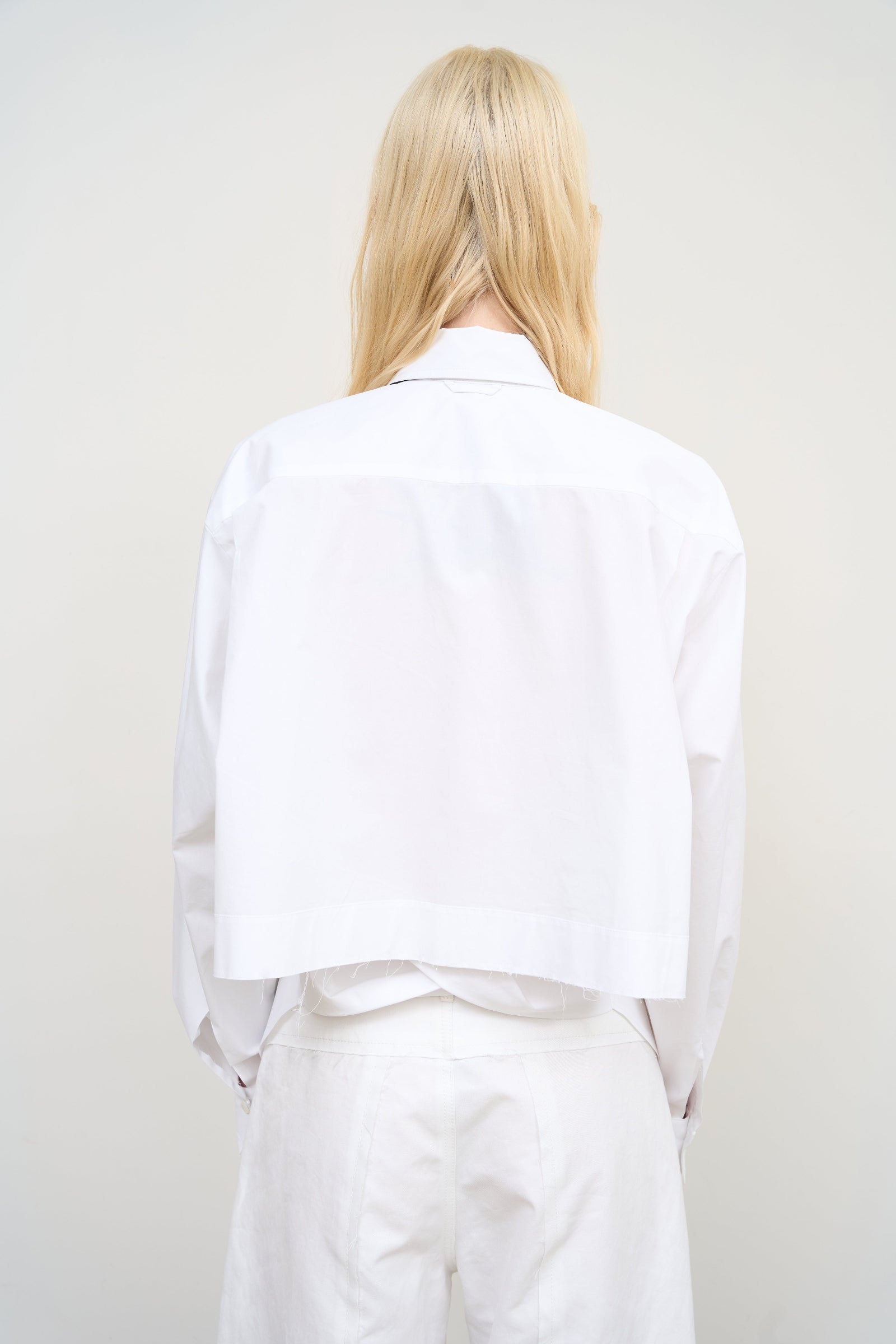
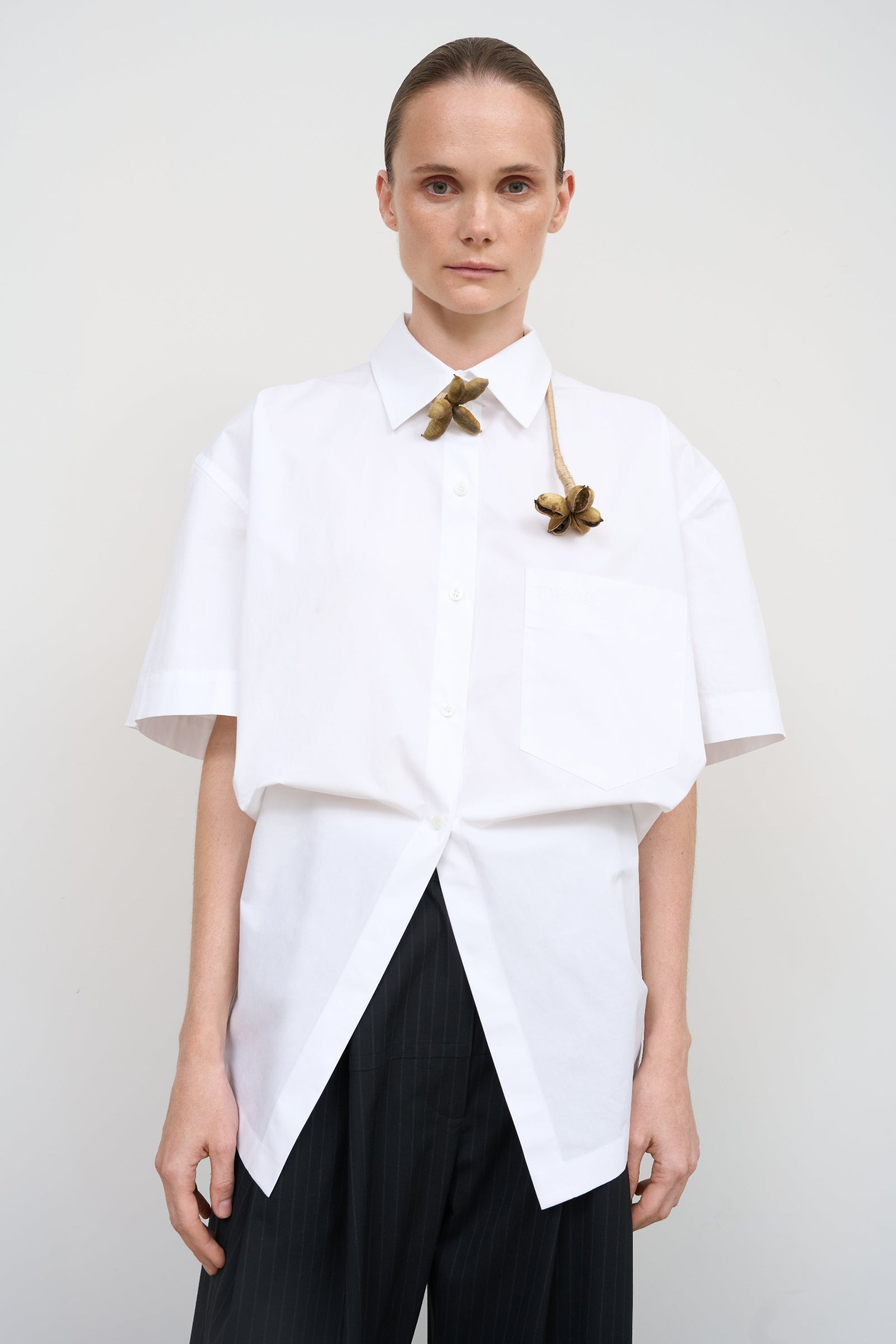
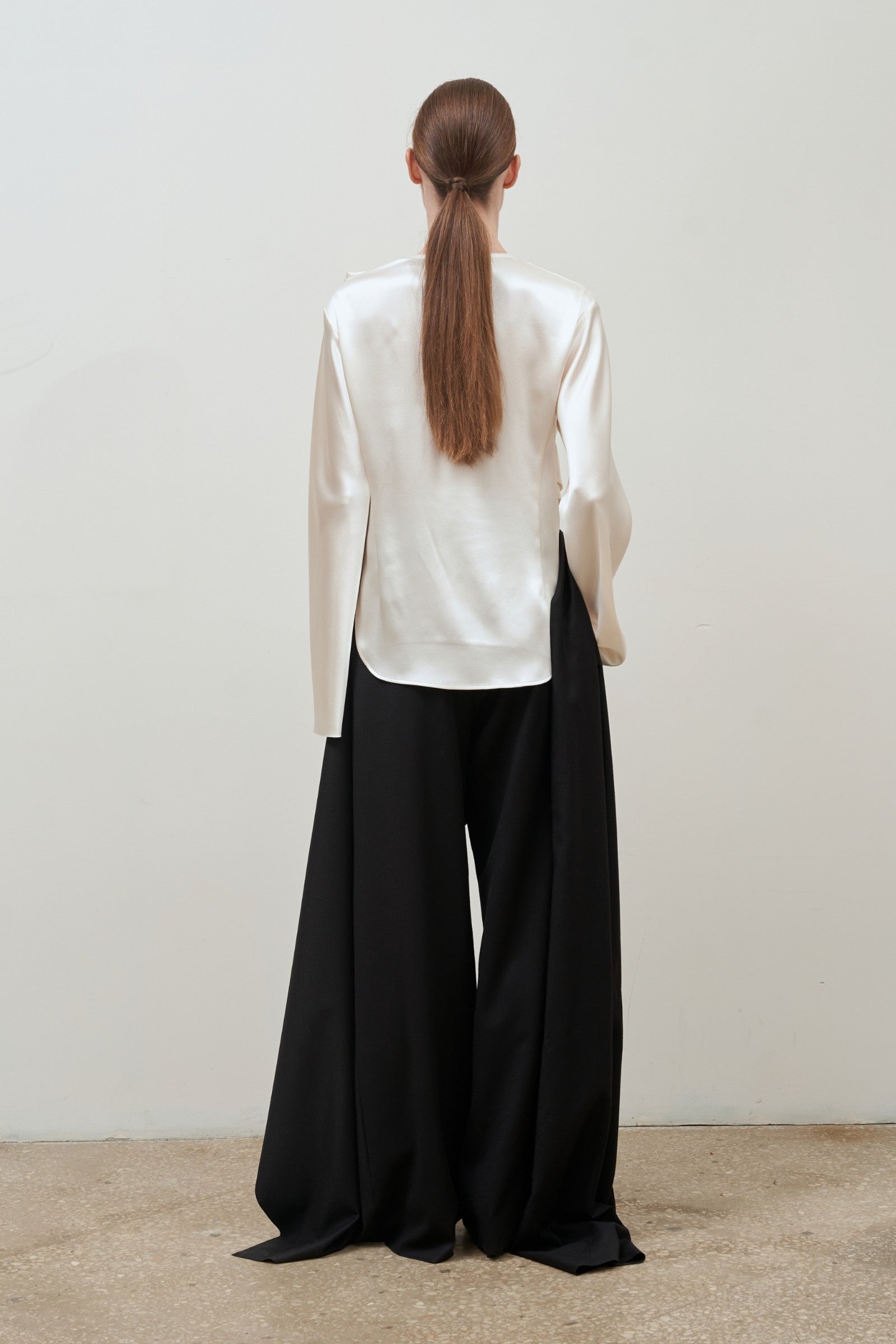
A shirt begins with a familiar construction. LITKOVSKA shifts it through an uneven hem, a displaced fastening or a second layer that changes the original line. Blouses follow the same approach. Fabric is twisted, draped and opened to create a less conventional shape.
Shirts and Blouses in the LITKOVSKA Collection
The collection brings together fitted women’s shirts, loose poplin styles, denim pieces and layered blouses. Each fabric responds differently to the cut.
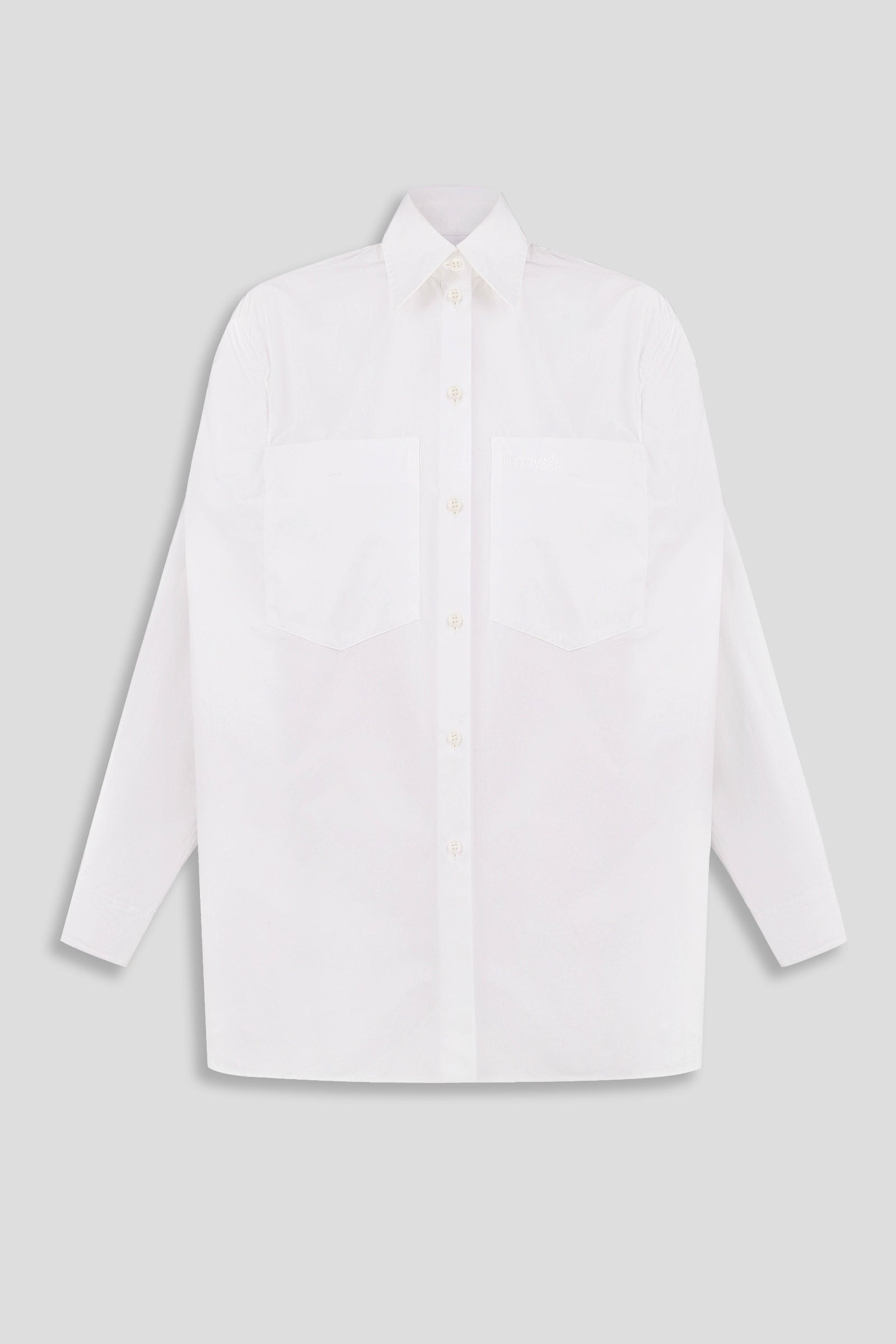
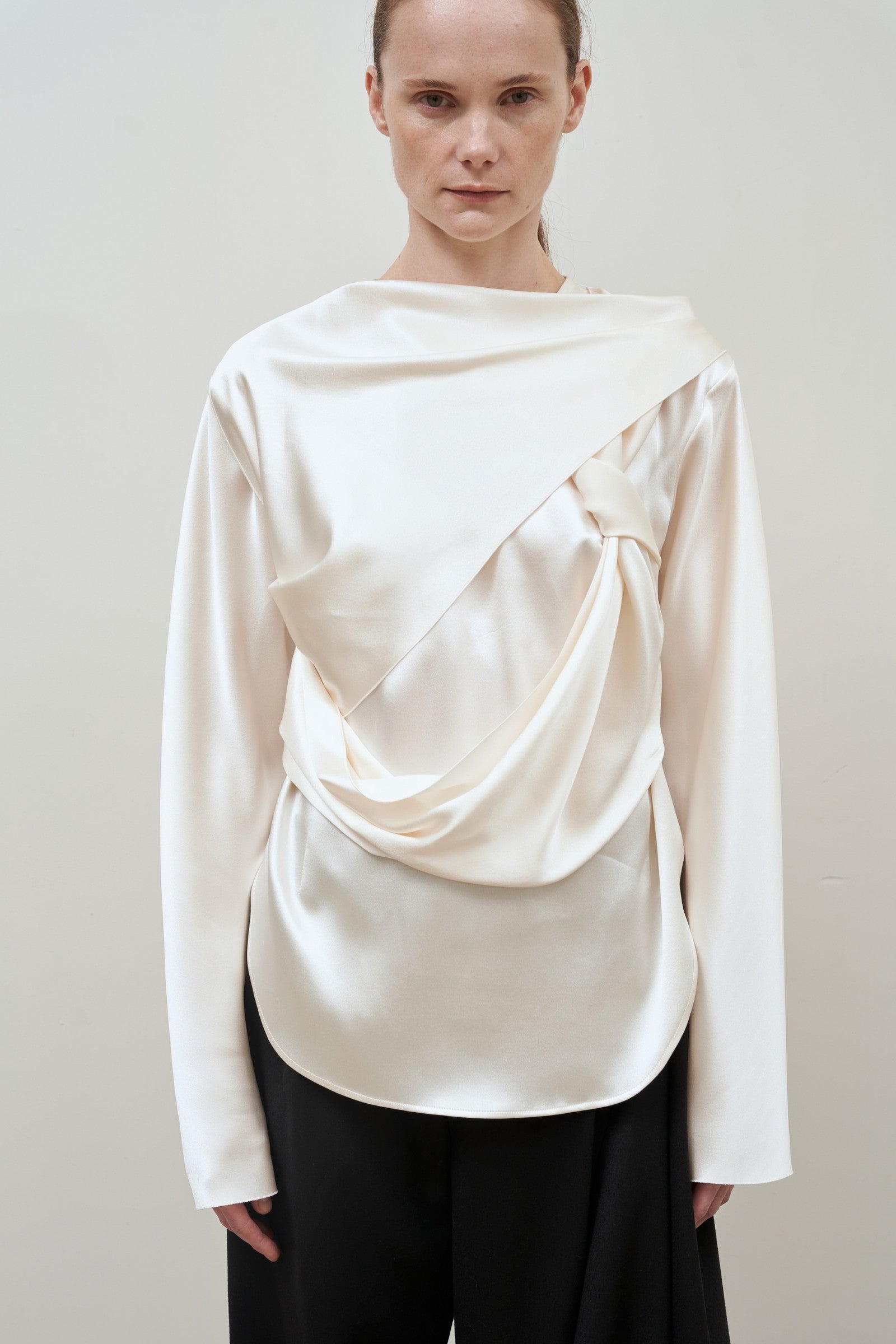
Poplin holds a defined collar and creates a clean line around the shoulders. Lightweight cotton allows longer sections and layered details to move more freely. Denim gives shirts additional weight, making seams and panels more visible. In draped blouses, the fabric gathers around the body instead of following a fixed outline.
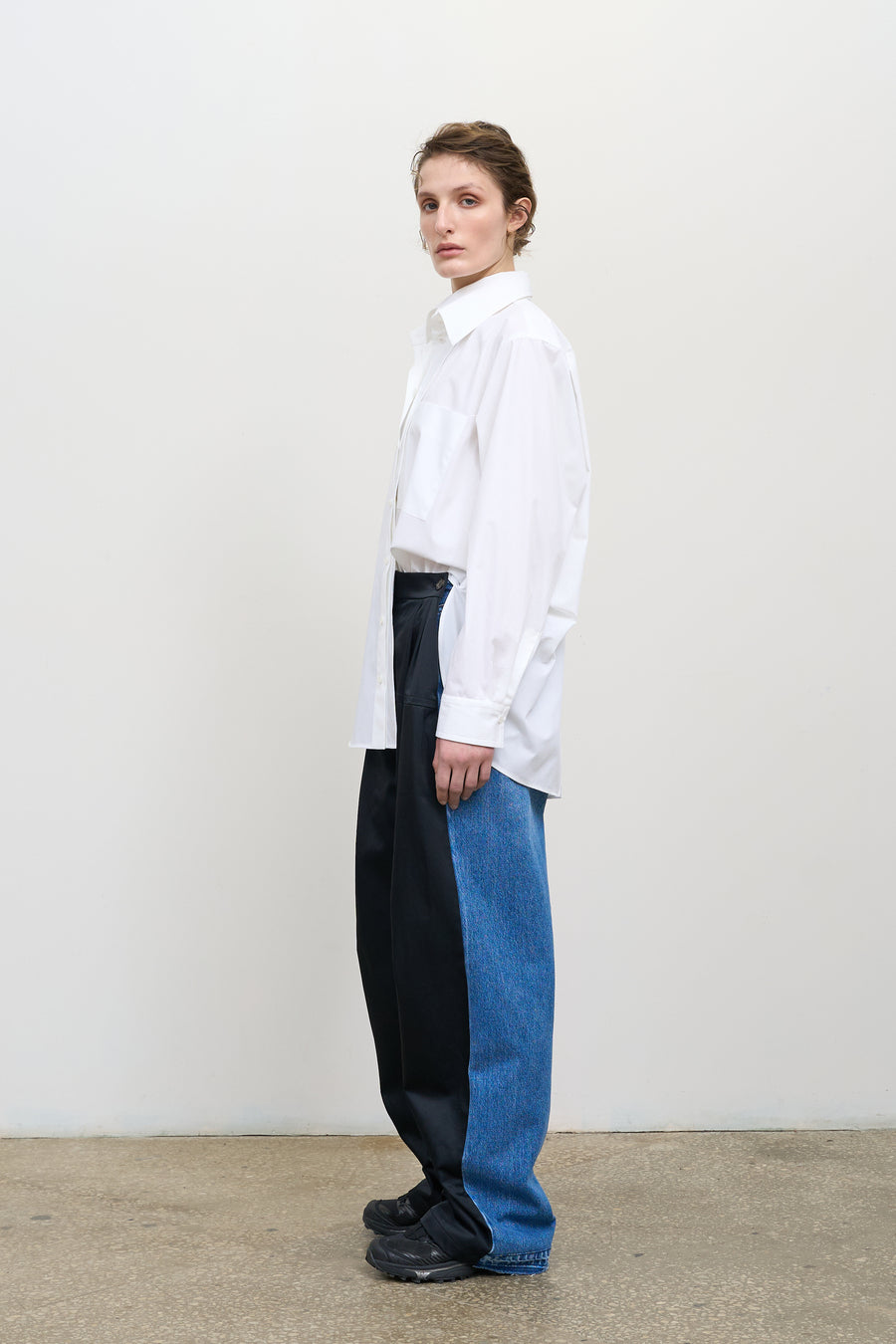
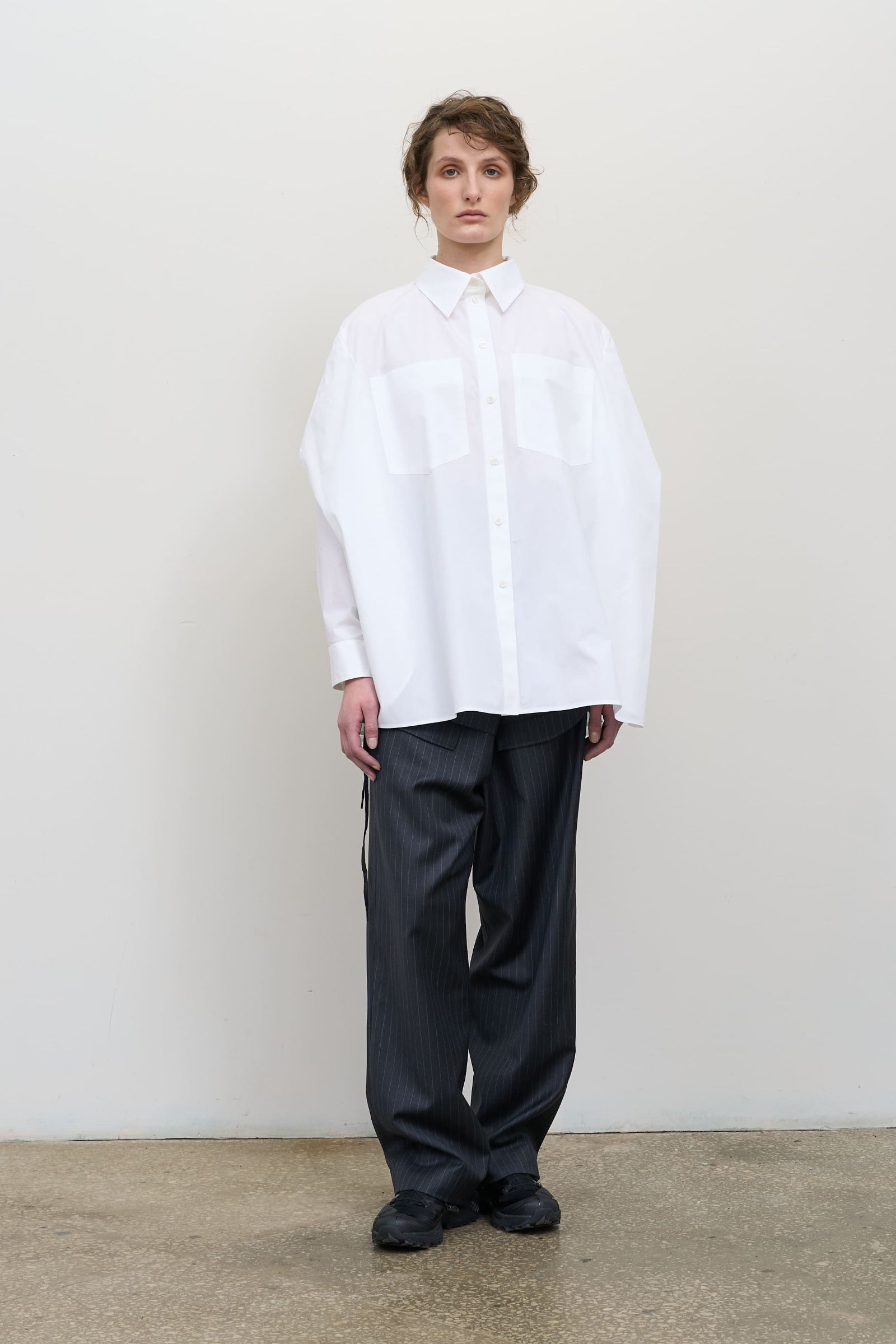
A tailored model may sit close to the waist and shoulders. Longer and oversized shirts create space around the body, particularly through the sleeves and hem. The difference is visible in motion, not only in the way a piece looks on a hanger.
Deconstructed Shapes and Signature Details
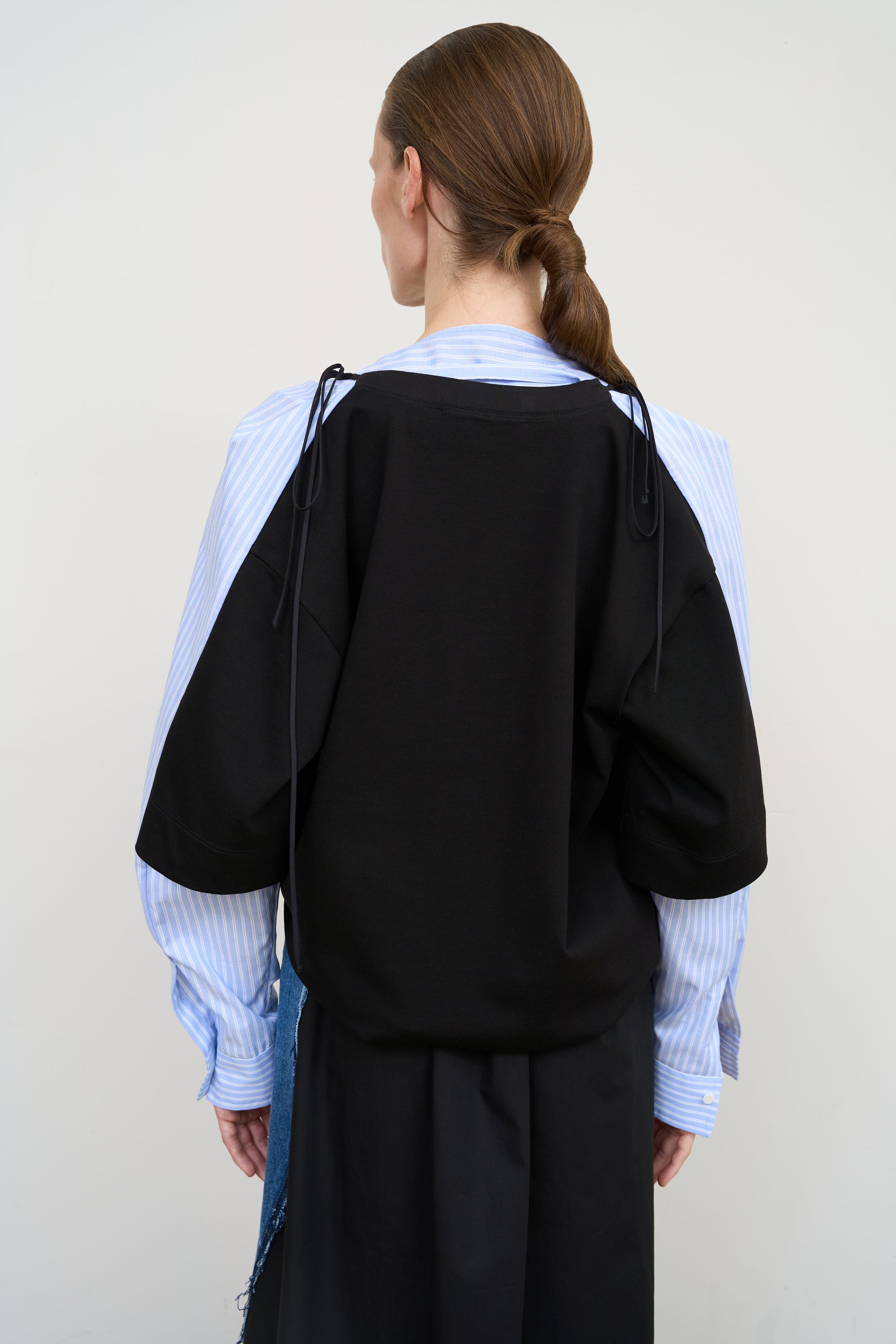
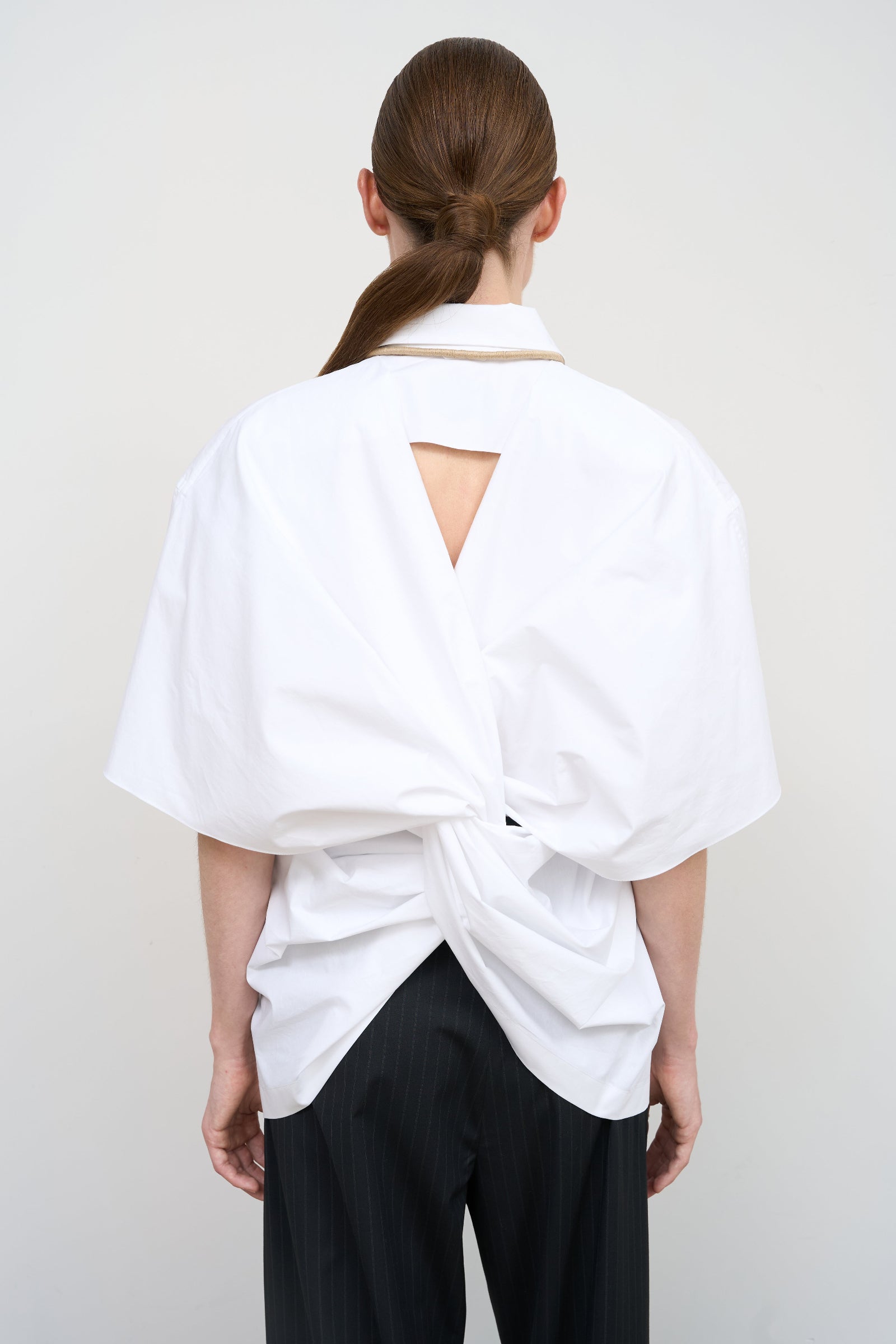
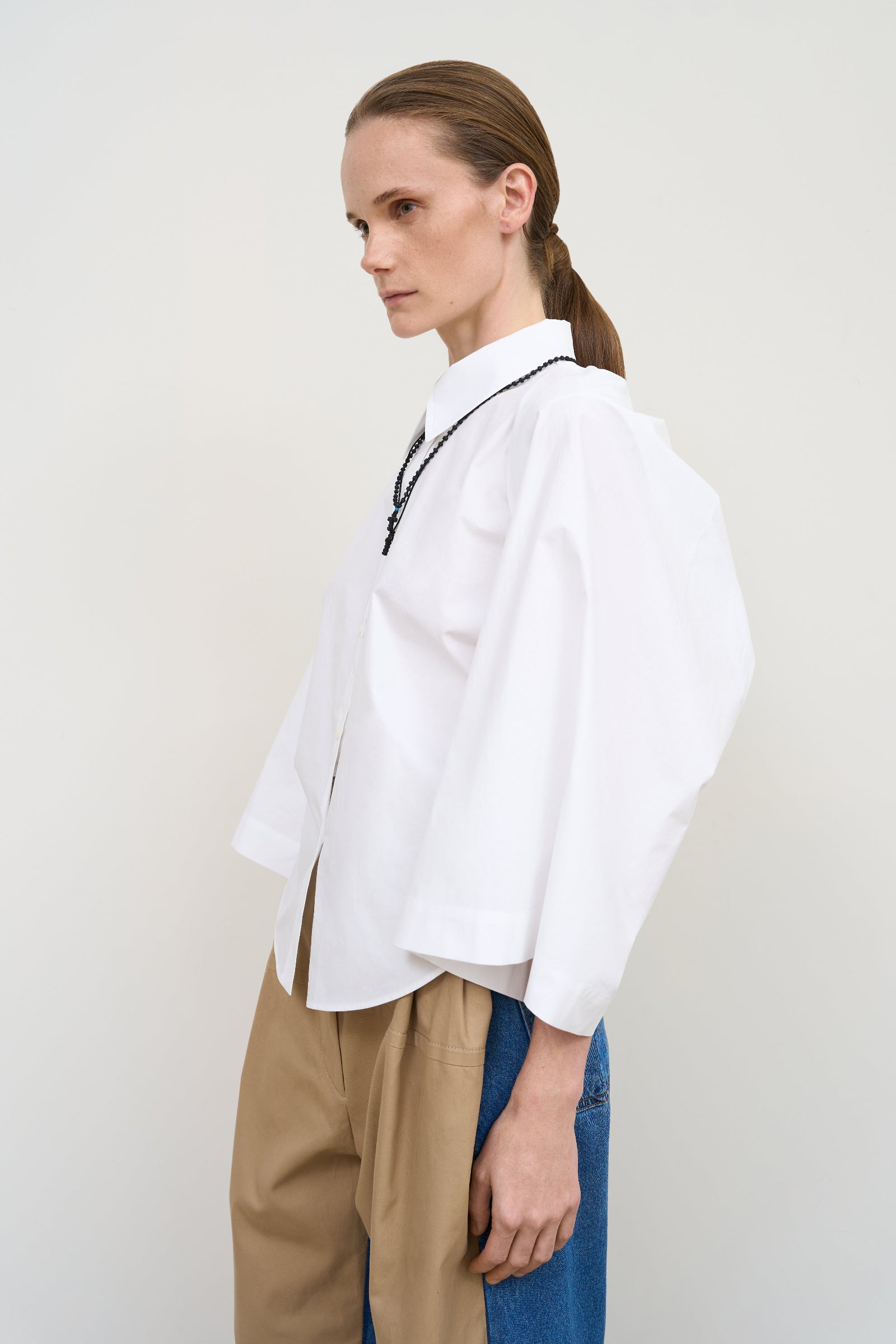
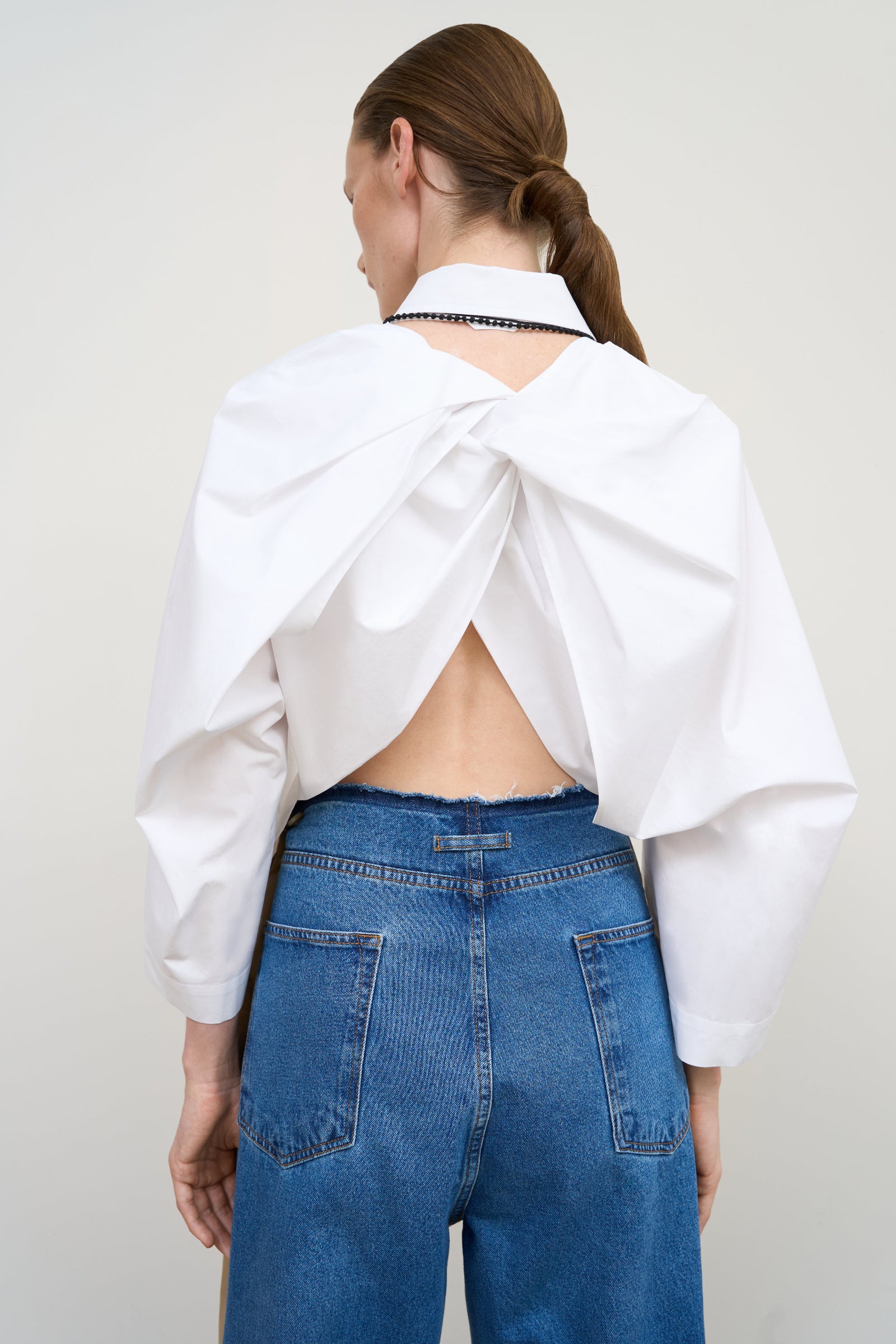
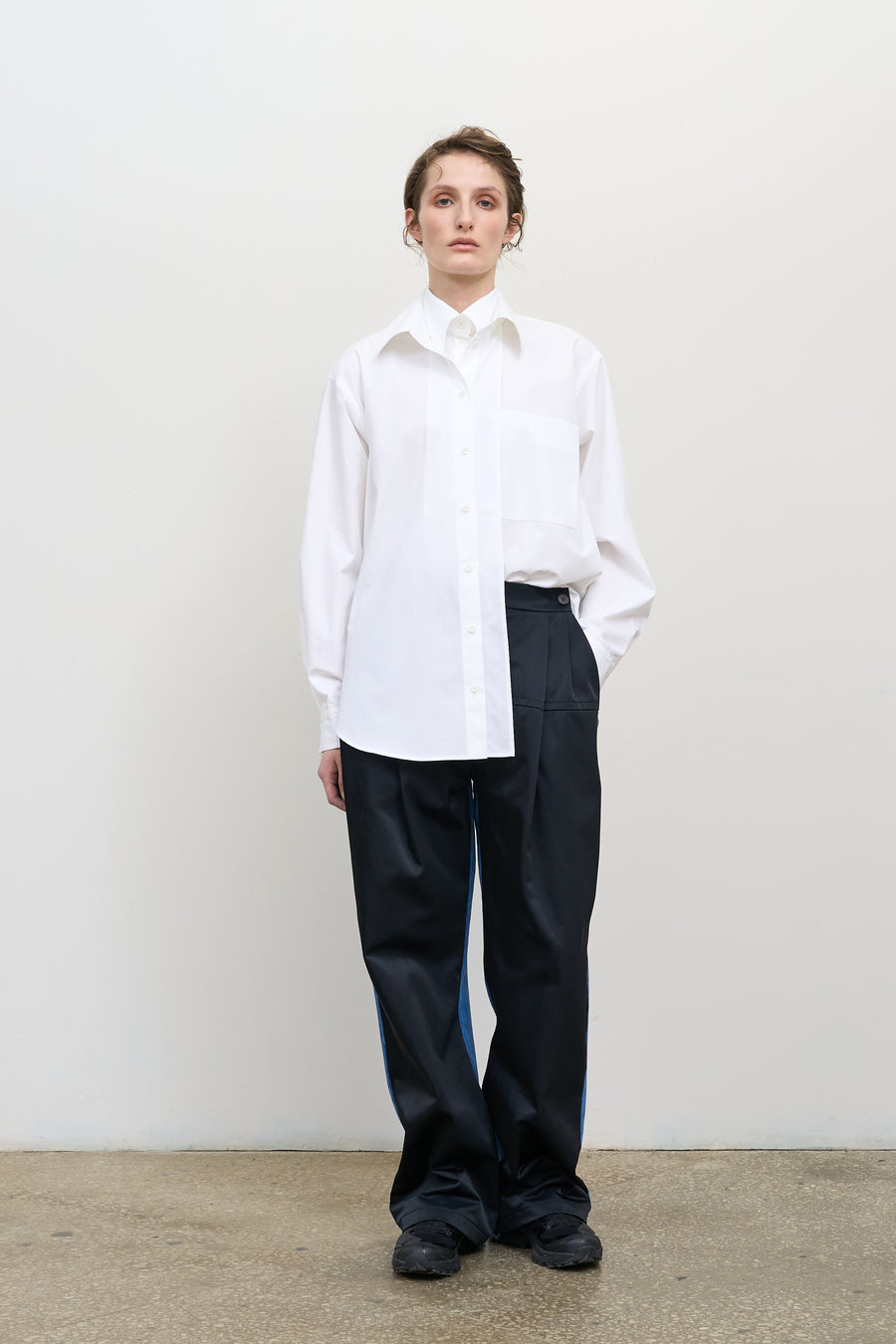
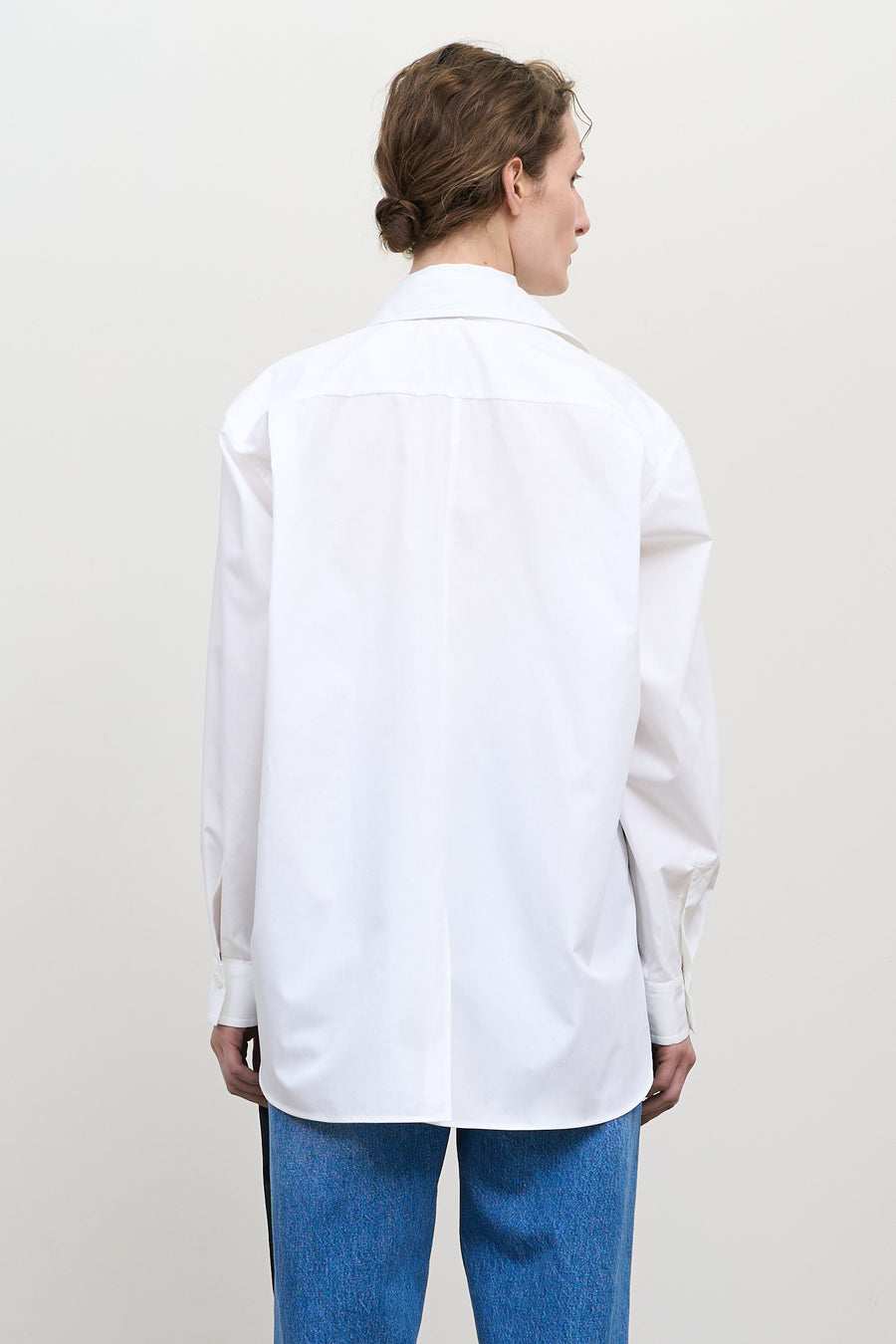
The details in LITKOVSKA shirts are part of the construction. Double collars change the neckline. Off-centre fastenings move the visual axis, while transformed sleeves alter the shoulder line. Open backs and cutout sections expose only selected areas, keeping the rest of the shape precise.
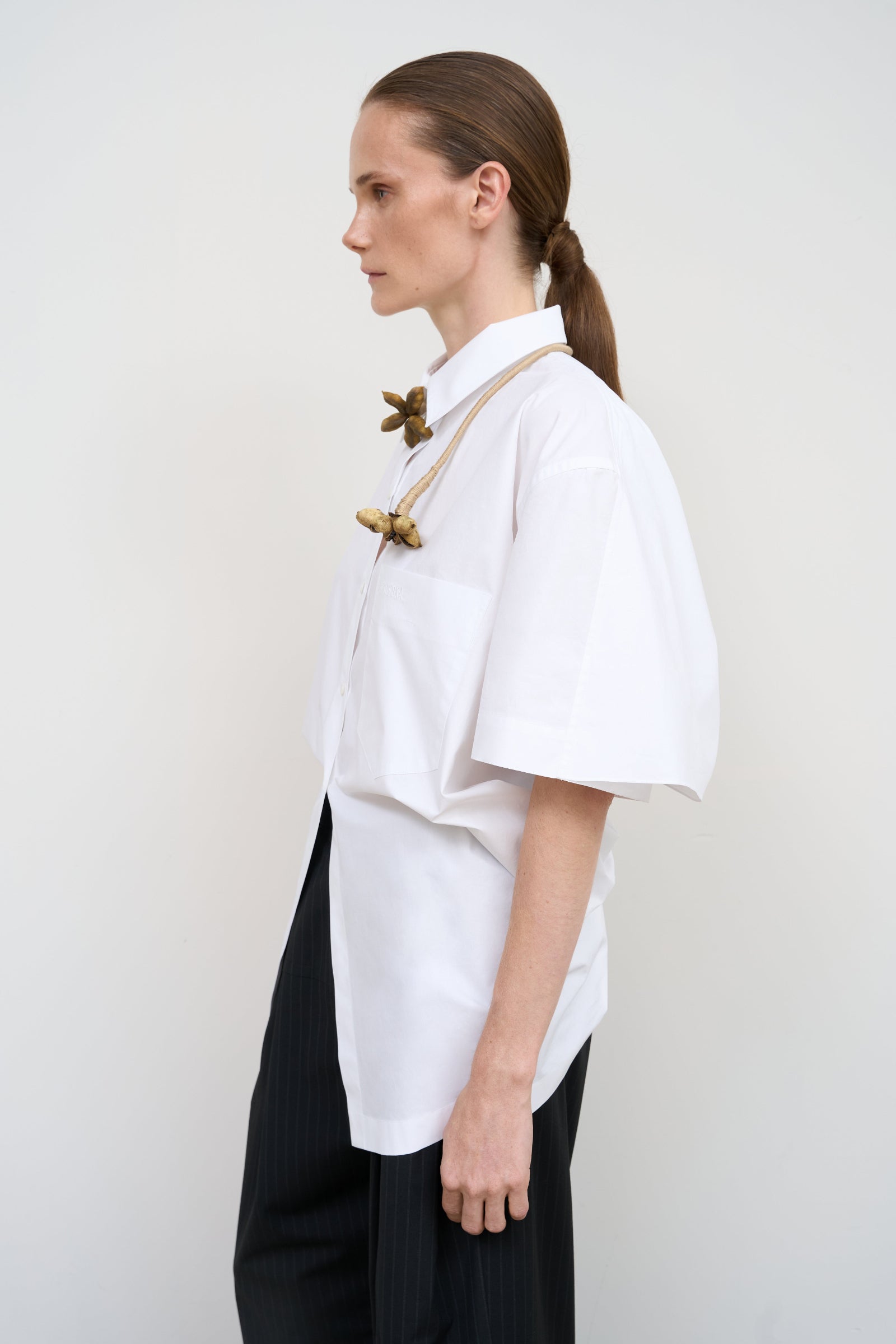
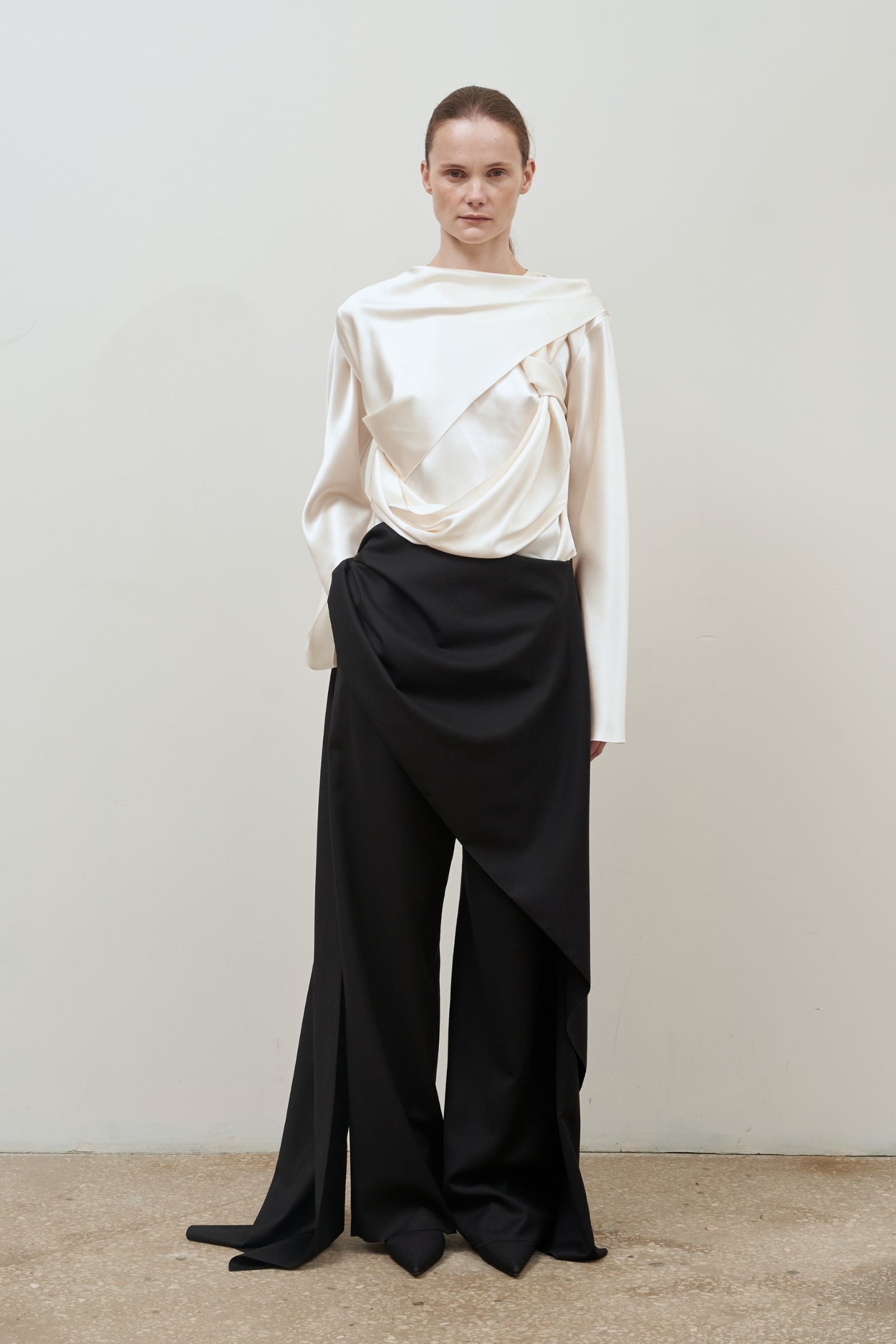
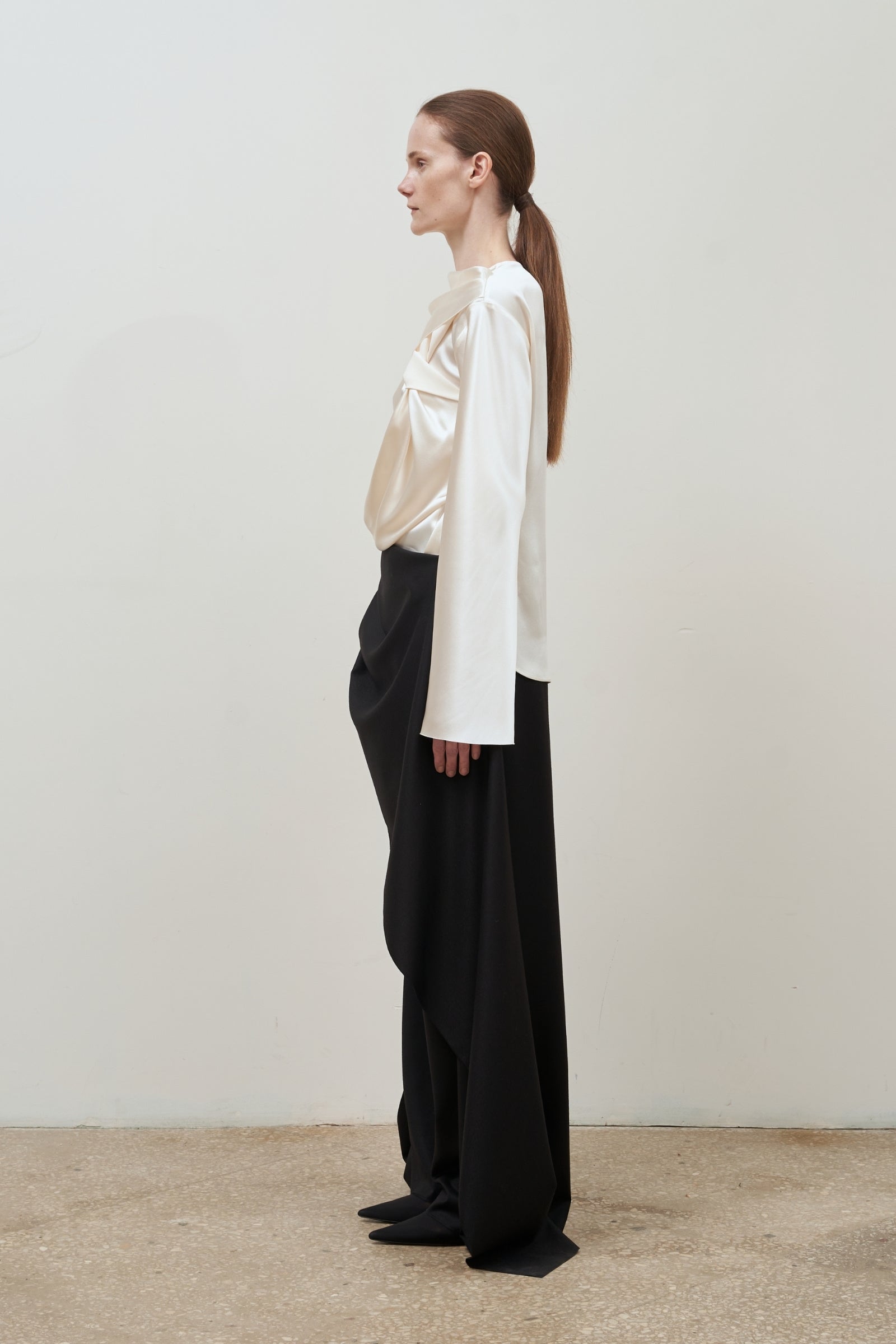
Women’s blouses introduce volume through twists, folds and layered fabric. A scarf detail may continue from the neckline, or an additional panel may extend beyond the main hem. Asymmetric edges interrupt the expected line without making the garment feel unresolved.
Even a straight shirt can look different once the expected proportions are shifted. A longer sleeve, a cropped front or a second visible layer is enough to change how the piece relates to the body.
From Fitted Lines to Sculptural Volume
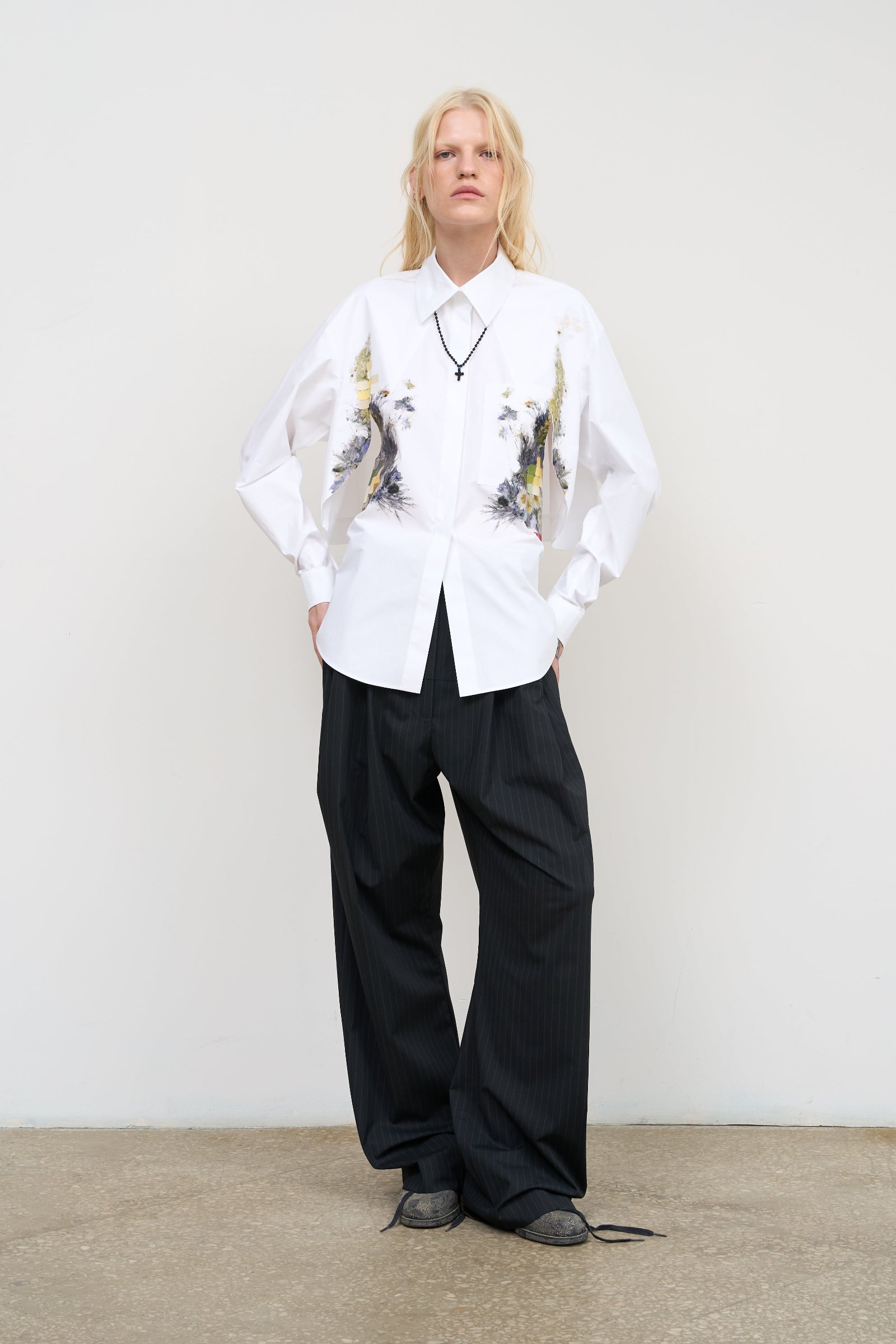
Fitted shirts place more emphasis on the waist and shoulders. They create a clear upper line when paired with wide trousers, relaxed jeans or voluminous skirts. A straight cut is less defined but still keeps the silhouette controlled.
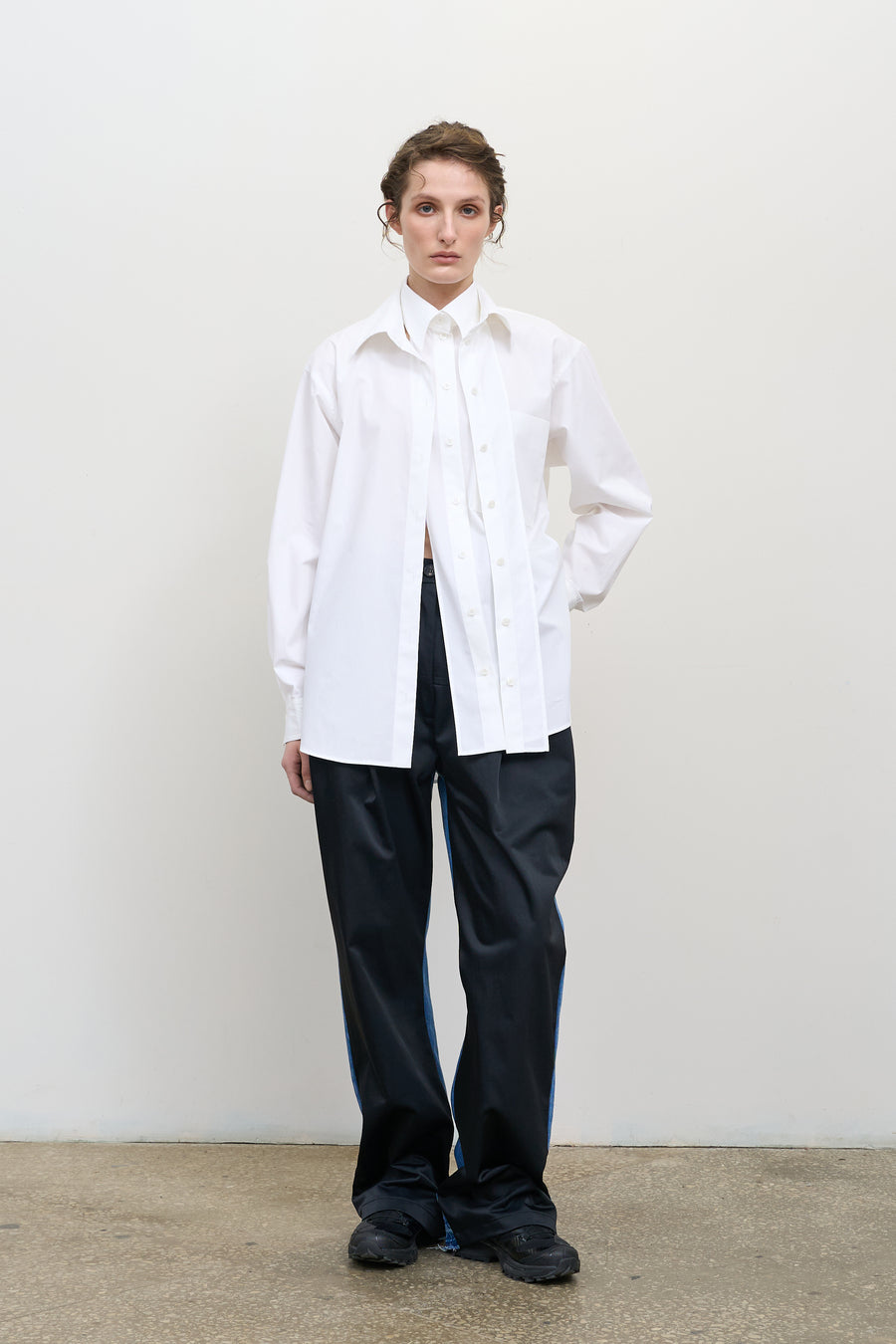
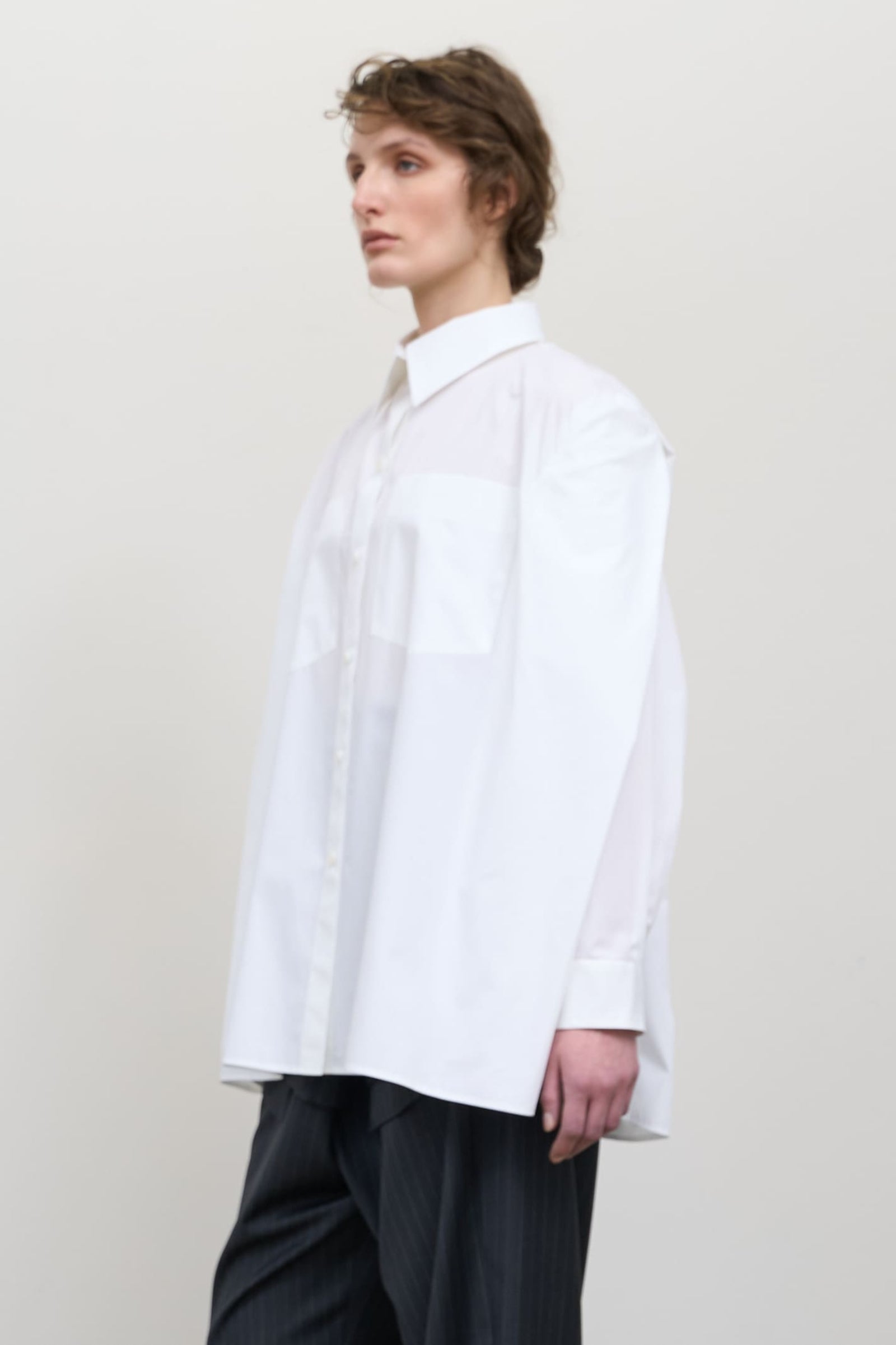
Oversized shirts behave differently. Dropped shoulders and extended sleeves add width, while a longer hem draws the eye downward. Worn open, the shirt becomes a light outer layer. Partially fastened, it creates an asymmetric opening and changes the proportions again.
Draped and voluminous blouses do not need a rigid outline. Their shape appears through folds, movement and the space between the fabric and the body. The rest of the outfit can either balance that volume or extend it.
How to Style LITKOVSKA Shirts and Blouses
A blouse with draping or layered details already has a strong visual presence. Straight trousers, clean denim or a skirt without excessive decoration leave that construction visible. More restrained women’s blouses can be paired with wider shapes and contrasting textures.
Denim shirts bring weight to an outfit. They can be worn with tailored trousers or combined with jeans in a close shade. Poplin creates a sharper contrast beside soft knitwear, washed denim or fluid skirts.
Layering reveals details that may disappear when a shirt is worn alone. A collar can remain visible above a vest. Long cuffs can extend beyond jacket sleeves. An asymmetric hem can appear below a shorter outer layer. The point is not to display every detail at once, but to decide which line should remain visible.
Fitted, straight and oversized shirts create different proportions. The choice depends on the role the piece plays in the outfit: a precise first layer, a source of volume or the main structural element.